
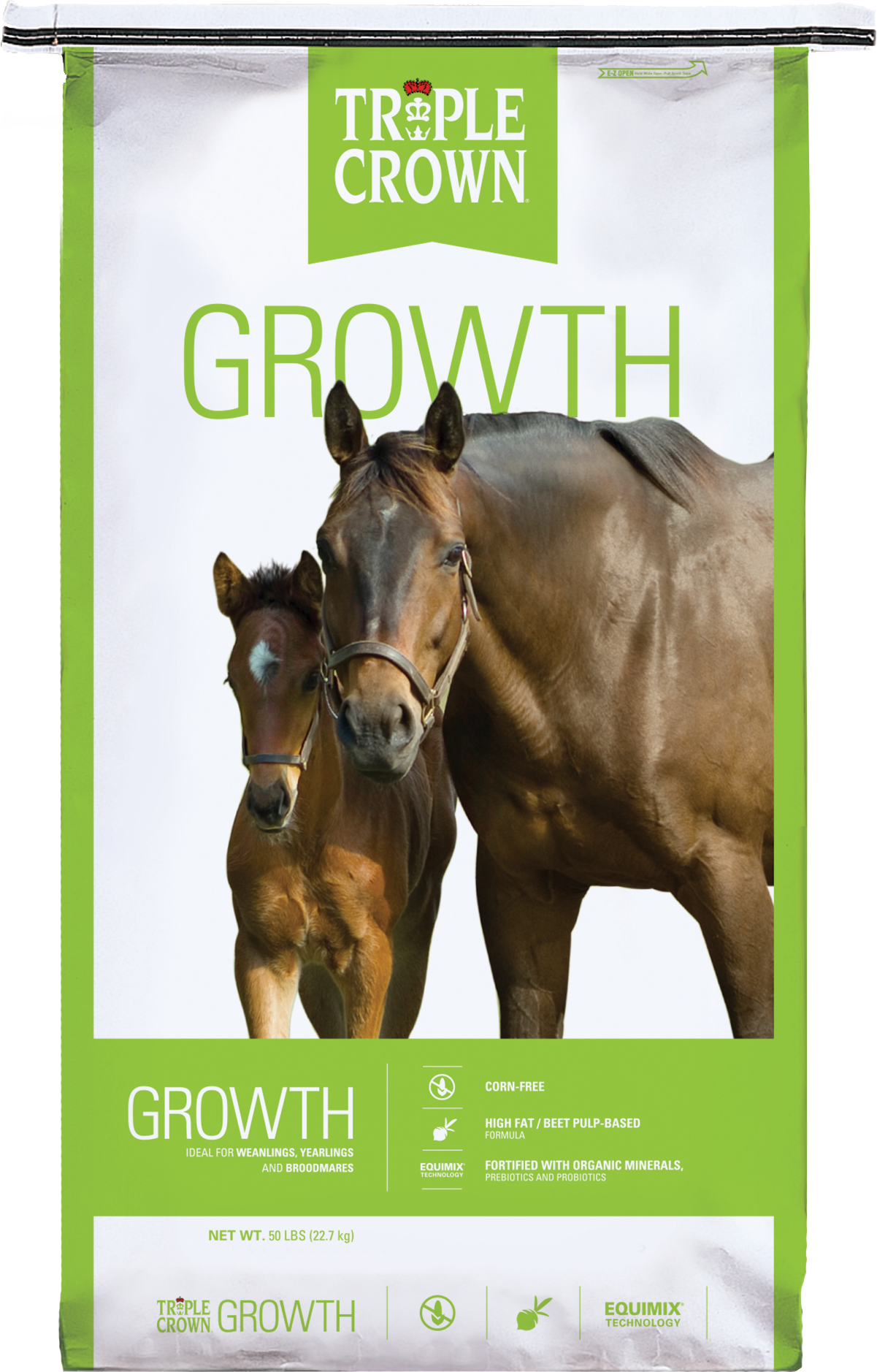
Triple Crown Growth
Ideal for weanlings, yearlings, broodmares and breeding stallions
%
Crude Protein
%
Max Crude Fiber
%
Crude Fat
Overview
A moderate soluble carbohydrate, high fat, high fiber, beet pulp-based feed. Ideal for weanlings, yearlings, broodmares, and breeding stallions.
Triple Crown Growth is fortified to provide essential amino acids, vitamins, minerals, probiotics, enzymes and proteins essential to equine growth. Utilizing the latest research regarding nutritional support for growing horses, Triple Crown Growth provides more calories through quality fiber and fat, reducing the need for elevated levels of carbohydrates, which helps your horse experience a more consistent growth pattern and healthier joints throughout its life.
Feeding Instructions
Triple Crown Growth should be fed to growing horses along with free access to good quality pasture and/or hay, fresh clean water and plenty of free exercise. For nursing foals, feed 1% of body weight up to 400 lbs. For weanlings and older, the amount of Triple Crown Growth fed daily should be adjusted to maintain a moderate body condition level. If not sure how much to feed, begin with 6 – 8 pounds per day divided into as many feedings as feasible and then adjust up or down depending upon the needs of the individual horse. If feeding less than 5 pounds of Triple Crown Growth on a regular basis due to easy maintenance of desired body condition then 1/2 to 1 pound per day of Triple Crown 30 Supplement should also be fed in combination with Triple Crown Growth as means to insure adequate mineral and vitamin intakes to support sound growth. For Ponies, feed half of the recommendations listed above for horses.
NOTE: Provide plenty of fresh, clean water at all times. Keep product fresh in cool, dry storage. Examine product daily for mold or insect contamination. DO NOT use product that is old, molded or insect contaminated.
Ingredients
Main Ingredient
Probiotic
Common Sensitivity
Guaranteed Analysis
***The following coefficients of variation (cv) can be associated with the carbohydrate analyses. These should reasonably account for both sampling and analytical variation, though as you know, poor sampling can lead to much larger variation. The coefficients of variation (cv) for starch is 10%, WSC is 15% and ESC is 15%. For example, a feed with a WSC value of 10% should be expected to range from 8.5 – 11.5% and a WSC value of 20% to range from 17 – 23%. In addition, there are variables on ingredients between suppliers that could be as much as an additional 5% to 10% per ingredient. Therefore, products, such as TC 30% Supplement potentially would have a smaller variation than TC Lite due to the number of bulk ingredients making up the feed (2 vs. 4).